

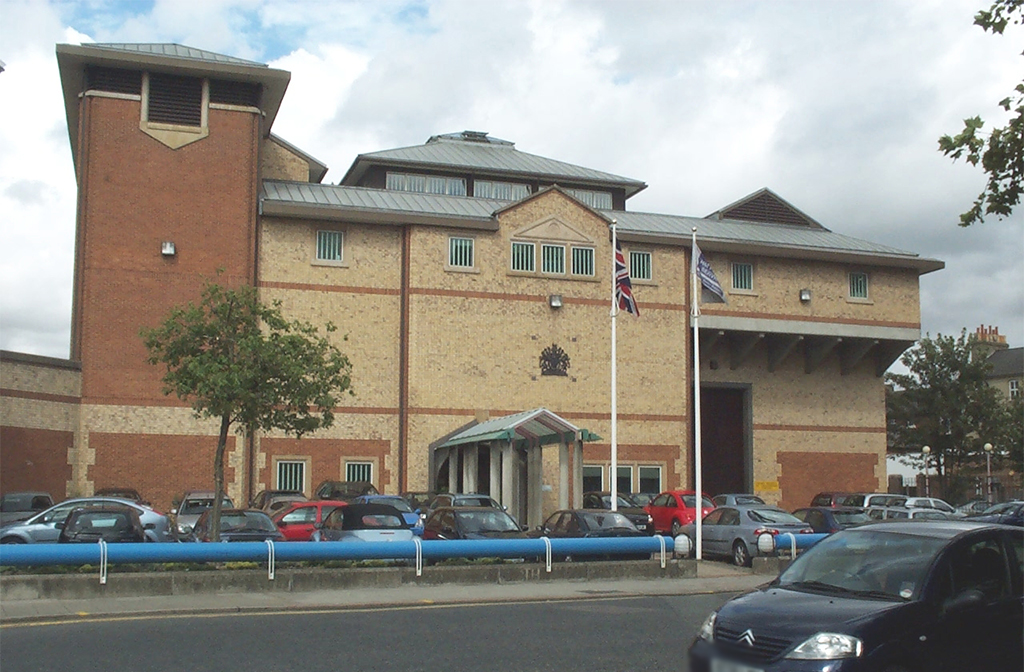
A jury has found that the decision to reduce observation levels on a vulnerable prisoner at HMP Bedford probably contributed to his death, after hearing that key mental health information had not been shared with staff.
At the inquest into the death of 42-year-old Melvin Grant, jurors said the decision to downgrade his observations from constant to intermittent “probably made more than a minimal contribution” to his death.

His brother said Melvin had been “failed by the systems that were supposed to keep him safe”, while the charity INQUEST described his death as a stark reminder of how prison conditions can cause severe distress.
But the Prisons and Probation Ombudsman (PPO), in a report published earlier this year, said the decision to end constant supervision had been reasonable in the circumstances, while also identifying serious failings in the emergency response and in mental health care at the prison.
Found unresponsive
Mr Grant was found unresponsive with a ligature around his neck in the healthcare inpatient unit at HMP Bedford on 14 November 2023. Staff did not enter his cell immediately, and there was also a delay in calling an ambulance.
He was taken to hospital, placed on life support and died on 21 November 2023, from a hypoxic brain injury and pulmonary oedema caused by ligature strangulation.
Mr Grant had been on constant watch under the prison’s suicide and self-harm prevention procedures, but supervision was reduced to four checks an hour earlier that same day.
Rapid decline in health after transfer
Mr Grant had been remanded to HMP Thameside on Tuesday, 29 August 2023, charged with robbery, and transferred to HMP Bedford at the end of September.
Within six weeks, his mental health deteriorated sharply. He refused medication and meals, became increasingly frustrated about being held in Bedford, and on 9 November, swallowed two razor blades after an argument over a delay with his prison canteen.
This led to an Assessment, Care in Custody and Teamwork (ACCT) document being opened to monitor his risk of self-harm.
On Monday, 13 November 2023, after setting fire to his cell, he was taken to hospital for smoke inhalation, returned to prison, and placed on constant supervision.
Later that day, he told a nurse he was hearing voices telling him not to eat or drink and to be violent, and that the only way to stop them was to end his life.
A manager-led ACCT review that evening decided constant supervision should continue and that he should be seen by a psychiatrist the following morning.
Observation decision ‘probably contributed’ to death
The psychiatrist who saw Mr Grant on 14 November 2023 diagnosed drug-induced psychosis linked to previous drug use and prescribed antipsychotic medication.
That afternoon, a multidisciplinary ACCT review lasting about nine minutes concluded that Mr Grant was no longer in crisis and that constant supervision could be discontinued.
His observations were reduced to four checks an hour, and he was moved to the prison’s healthcare inpatient unit for closer observation and to ensure he took his medication.
The PPO later said the decision was reasonable, as constant supervision is intrusive and should be used for the minimum time possible. The report said staff tried to reduce risk by keeping Mr Grant under a “high level of observation” and moving him to a healthcare setting.
But evidence at the inquest showed that key information from the day before the downgrade, including Mr Grant telling staff he wanted to end his life to stop the voices in his head, had not been reviewed by those who decided to reduce his observations.
A note made by a prison officer at hospital, recording that Mr Grant said he no longer wished to live, was also missed.
The jury concluded that this failure to share and consider vital information meant the decision to downgrade his supervision was unsuitable and that it probably contributed to his death.
Delays and failures

On 14 November 2023 at 9.38pm, an officer saw Mr Grant lying face down with a ligature around his neck and called a medical emergency code blue.
Two nurses and another officer arrived quickly, but the officer at the door waited for a third colleague before entering, even though four staff were already present. The cell was opened almost two minutes later, delaying CPR.
Control room staff did not call an ambulance until 9.44pm, six minutes after the initial code. CPR began at 9.46pm, and paramedics arrived at 9.51pm.
The PPO said it could not say whether the delay changed the outcome, but that any delay in a medical emergency could be critical.
The jury described a “significant delay” in calling an ambulance and said the healthcare response was “extremely inadequate”.
Northamptonshire Healthcare NHS Foundation Trust, which provides healthcare at the prison, admitted a number of shortcomings, including that the senior nurse on duty was out of date for Immediate Life Support training and failed to take charge of the resuscitation.
Poor oversight
The PPO also found broader problems with the way ACCT procedures were being managed at Bedford, including missing supervisor checks and care plans lacking meaningful detail.
The Ombudsman said this showed a lack of management commitment to quality assurance and recommended that the Governor carry out an audit of supervisor checks.
A clinical reviewer found that the mental health care Mr Grant received was only partly equivalent to what he would have expected in the community and that staff had not used standardised assessment tools in line with NICE guidelines.
The Head of Healthcare was told to review both mental health assessment procedures and emergency response training.
HMP Bedford already under scrutiny
At the time of Mr Grant’s death, HMP Bedford was subject to an Urgent Notification following a damning inspection between October and November 2023.
Three of the four inspection areas were rated poor, with inspectors describing some of the worst prison accommodation they had ever seen.
Self-harm had risen by 84 per cent since the previous inspection, making Bedford among the highest in the prison estate.
Read: “Some of the worst conditions ever seen” says inspector of “neglected” Bedford jail
Inspectors also said mental health services were failing to meet prisoners’ needs and that suicide prevention reviews were often incomplete or lacked multidisciplinary input.
Mr Grant was the sixth prisoner to die at Bedford since November 2020.
Read; Ombudsman criticises ‘unacceptable and inhumane cell conditions’ at HMP Bedford after prisoner death
Family says systems failed to keep him safe
After the inquest, Mr Grant’s brother, Morris, said the systems meant to protect his brother had failed because staff did not take responsibility for gathering and sharing key information and instead relied on others to do so.
Speaking through his Solicitor, Joanna Khan of Bhatt Murphy, he said, “Melvin was failed by the systems that were supposed to keep him safe.
“It was deeply frustrating to hear at the inquest how many of those responsible for looking after Melvin took no initiative to gather or share relevant information, and appeared to ‘pass the buck’ or rely on others rather than taking responsibility themselves.
“The length of time that it took for Melvin’s inquest to be heard was also not only very distressing for us as a family, but allowed many witnesses to respond to questions by saying that they did not remember.
“No family should have to endure such a lengthy wait for answers about what happened to their loved one.”
Selen Cavcav, senior caseworker at INQUEST, a charity providing expertise on state-related deaths and their investigation, added that Melvin Grant had needed care and support, not punishment, and that his death showed the level of distress prisons can cause.
“Melvin needed care and support. Instead, his death is a stark reminder that prisons cause severe distress. In just six and a half weeks on remand at HMP Bedford, where inspectors flagged rampant racism, Melvin’s mental health rapidly declined.
“His distress was dismissed and his needs ignored.
“Too many Black people remain locked up in prison where they face racism and neglect on a daily basis. Without urgent intervention, the risk of further deaths remains.
“The government must invest in community-based alternatives that address the root causes of harm, not more prisons.”
But the PPO’s report suggests that while there were clear failings in the emergency response, mental health care and oversight of suicide prevention procedures, staff believed they had reduced his risk and were trying to provide closer monitoring when they ended constant supervision.
The report says that the decision to end constant supervision on 14 November was “a reasonable one”.
In his recommendations, the PPO Adrian Usher said the Head of Healthcare should review the training arrangements in place to support the effective delivery of resuscitation and the capability of the healthcare workforce in emergency response.
Also, the Head of Healthcare should review the arrangements for assessing mental health needs to ensure they are consistent with NICE guidelines.
He also said the Governor should carry out an audit to identify whether ACCT supervisor checks are being completed and address any failings.


