


A Bedford woman who has lived with the long-term effects of childhood brain cancer for more than three decades is calling for more research into kinder, less damaging treatments.
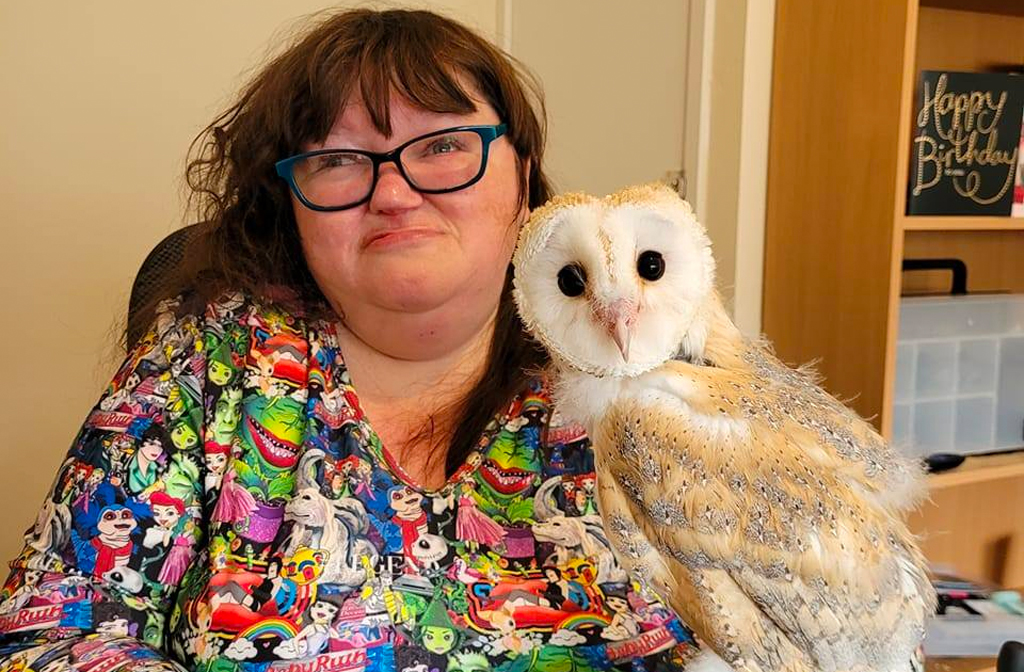
Laura Peggs, 45, from Putnoe, was just 10 years old when she was diagnosed with an ependymoma, a rare type of brain tumour.

Following a craniotomy and radiotherapy, she survived, but now lives with profound hearing and sight loss, mobility challenges, and chronic pain.
Sharing her story as part of Childhood Cancer Awareness Month (CCAM), Laura is supporting Brain Tumour Research’s campaign to fund more effective and less invasive treatment options.
“I know that the type of brain tumour I am living with has a very poor prognosis, so I was very lucky to survive,” said Laura. “But because it’s your brain, which affects your whole body, surviving the tumour can still mean being left with a whole range of disabilities.”
Unlike most children starting Year 6, Laura faced an eight-hour operation to remove part of the tumour and have a shunt fitted, followed by radiotherapy treatment that has left lasting effects.
Now in her 40s, she uses a wheelchair and attends regular appointments for pain management. Despite this, she studied A-Levels, gained a degree in molecular biology from Anglia Ruskin University in Cambridge, and worked as a pastoral assistant.
“I’ve become very resourceful – I’ve had to,” she said. “My desire to learn has overridden any fears. By speaking out, I hope I can help others feel less alone and show that there is life, strength and even creativity beyond a diagnosis.”
Survivor’s guilt
Laura has raised more than £700 for Brain Tumour Research through creative fundraising, including making needle-felted pin badges for the charity’s Wear A Hat Day. She also completed the charity’s 10,000 Steps a Day in February Challenge using a four-wheeled walker.
“When I went through my brain tumour treatment in the 80s, the options were harsh and limited,” she said. “Although there’s been progress since then, patients today are still facing gruelling therapies that can cause life-long disabilities.”
She added, “I often feel survivor’s guilt, knowing so many friends have died from this disease. It makes me even more determined to see brain tumours made a priority. We urgently need research that delivers kinder, less invasive treatments and real hope for the future.”
Brain Tumour Research funds a Centre of Excellence at Queen Mary University of London, where scientists are working on personalised treatments for aggressive childhood brain tumours like ependymoma.
More support needed
Charlie Allsebrook, community development manager for Brain Tumour Research, said: “We’re grateful to Laura for her continued support. Her story is one of determination, and we wish her well for the future.”
“The number of brain tumour diagnoses has increased by 11% in the last decade, yet just 1% of the national spend on cancer research has been allocated to brain tumours since records began in 2002.”
Brain Tumour Research is calling for a national annual spend of £35 million on research to bring brain cancer outcomes in line with those for breast cancer and leukaemia.
To find out more or to support the campaign during Childhood Cancer Awareness Month, visit: braintumourresearch.org/pages/childhood-cancer-awareness-month


